You’ve likely heard stories about tech giants who’ve shaped our digital landscape, but have you considered the mentorship networks that powered their success? From Bell Labs’ collaborative problem-solving sessions to Grace Hopper’s pioneering accessibility initiatives, technology’s evolution has always depended on knowledge transfer between generations. The journey from informal apprenticeships to today’s structured diversity-focused programs reveals how mentorship hasn’t just built products, it’s built our entire technological ecosystem. What hidden mentorship stories might explain the innovations you use daily?
The Apprenticeship Era: Computing Mentorship in the 1950s-60s
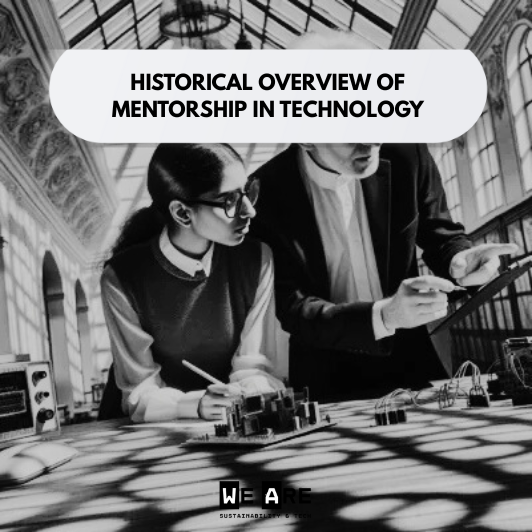
Pioneers of early computing relied heavily on mentorship structures that resembled traditional apprenticeships. You’d find experts directly guiding newcomers through computing culture in labs at MIT, Bell Labs, and IBM.
These mentorship dynamics facilitated rapid skill transfer as programming foundations were established through hands-on learning. Knowledge sharing wasn’t formalized, you’d learn by watching, doing, and receiving immediate feedback.
Early innovations emerged from these collaborative efforts, where mentors worked alongside mentees on actual problems. This approach accelerated technological evolution as expertise passed directly from experienced programmers to the next generation through deliberate, personal guidance.
Tech Industry Pioneers as Influential Mentors
As computing evolved beyond research labs into commercial enterprises, several visionary leaders emerged who shaped not just products but entire generations of technologists through their mentorship.
You’ll find that pioneer influence often manifested through direct apprenticeship models.
Steve Jobs cultivated innovation at Apple by challenging proteges to exceed expectations.
Bill Gates established mentorship dynamics that emphasized both technical excellence and market awareness.
Grace Hopper’s mentorship style combined technical rigor with accessibility, teaching young programmers to think creatively about computing problems.
These leaders understood that technology’s future depended not just on their innovations but on nurturing the next wave of visionaries.
The Rise of Structured Corporate Mentorship Programs
While individual tech leaders established powerful mentorship traditions, the 1990s and early 2000s witnessed a remarkable shift toward institutionalized mentorship within major technology corporations.
You’ll find these structured programs transformed how companies develop talent. IBM, Microsoft, and Intel pioneered formal mentorship initiatives that became integral to corporate culture, establishing frameworks other industries would eventually adopt.
What’s particularly innovative is how tech companies embraced reverse mentorship, where junior employees guide senior leaders through emerging technologies and trends.
This bidirectional knowledge flow creates adaptive organizations where expertise isn’t confined to hierarchical structures.
Today, you’re seeing these programs evolve into sophisticated talent development ecosystems supporting continuous learning.
Academic-Industry Partnerships in Technical Education
Beyond corporate walls, the intersection of academia and industry has transformed technical education through strategic partnerships.
You’ll find universities collaborating with tech giants to create curriculum that directly addresses market needs while providing students with real-world mentorship dynamics.
These partnerships offer you unprecedented access to industry experts who bridge theoretical knowledge with practical application.
When you participate in these programs, you’re experiencing a fusion of academic rigor and industry collaboration that traditional classroom settings can’t replicate.
The result? Graduates who enter the workforce already fluent in current technologies and professional expectations, a win for students, companies, and innovation itself.
The Impact of Open Source Communities on Collaborative Learning
Despite their decentralized nature, open source communities represent one of technology’s most powerful mentorship ecosystems.
You’ll find learning happens organically as contributors review your code, suggest improvements, and guide your development.
Open source advantages include exposure to diverse coding styles and problem-solving approaches.
You’re simultaneously mentee and mentor as you navigate these collaborative spaces.
Modern collaborative tools like GitHub, GitLab, and Discord have transformed these interactions, enabling real-time feedback across time zones and experience levels.
When you join an open source project, you’re not just building software, you’re entering a knowledge network where mentorship flows freely between participants regardless of formal credentials.
Digital Transformation of Mentorship: Online Platforms and Virtual Guidance
The digital age has completely reimagined how mentorship operates beyond community-driven settings.
You’ll find virtual mentorship transforming how knowledge transfers across borders through interactive platforms that eliminate geographical barriers. Digital learning settings now enable tech communities to foster connections previously impossible.
Remote networking opportunities have democratized mentorship accessibility, allowing you to connect with industry leaders around the globe.
Global mentorship programs deliver specialized guidance through virtual workshops tailored to your specific needs.
Digital resources complement these interactions, creating thorough learning ecosystems that adapt to your schedule and learning style, making professional development more personalized than ever before.
Cross-Generational Knowledge Transfer in Software Development
While programming languages evolve rapidly, the fundamentals of software development wisdom transcend technological generations.
You’ll discover that knowledge sharing between seasoned developers and newcomers creates powerful feedback loops that enhance skill development for both parties. The mentorship dynamics shift as Gen Z programmers might teach cloud-native approaches while Boomers share debugging wisdom.
This cultural exchange builds lasting legacy systems through relationship nurturing. Different mentoring styles – from structured guidance to peer mentoring – create varied career pathways.
When you embrace cross-generational collaboration, you’re not just solving today’s problems but connecting decades of technological evolution into tomorrow’s innovations.
Mentorship’s Role in Diversifying the Technology Workforce
Effective mentorship programs can break systemic barriers in tech by creating pathways for underrepresented groups to access opportunities previously out of reach.
When you see people who look like you succeeding in technology roles, you’re more likely to believe in your own potential to thrive in the industry.
Your career advancement accelerates when you’re connected to structured support networks that provide guidance, advocacy, and access to the hidden knowledge that often determines who advances in technology organizations.
Breaking Systemic Barriers
Despite significant progress in recent years, technology continues to face persistent diversity challenges that mentorship programs can help overcome.
You’ll notice how effective mentors actively dismantle systemic inequalities by creating pathways where traditional barriers once stood.
To transform tech’s homogeneous environment, you must prioritize mentorship accessibility for underrepresented groups.
This means designing programs that accommodate diverse learning styles, backgrounds, and circumstances.
When you remove financial, geographical, and social obstacles to mentorship, you’ll unleash innovation potential that’s been systematically excluded.
The result? A tech ecosystem where breakthrough ideas emerge from previously silenced voices.
Representation Changes Everything
As mentorship programs gain traction across the industry, representation emerges as the cornerstone of sustainable change in technology workplaces.
When you see diversity in leadership, you envision yourself thriving in similar roles.
The diversity impact of representation manifests through:
- Increased retention rates among underrepresented groups
- Enhanced innovation from diverse perspectives
- Expanded mentorship accessibility across organizational levels
- Accelerated career advancement for marginalized talent
You’ll find that representation isn’t merely about optics, it transforms workplace dynamics fundamentally.
Structured Support Networks
While informal mentorship happens organically, structured support networks provide the framework necessary to systematically diversify technology workforces. You’ll find these networks eliminate barriers through intentional design rather than leaving inclusion to chance.
Effective mentorship frameworks combine accountability, resources, and measurable outcomes. They connect underrepresented professionals with both senior sponsors and peer support groups, creating multi-dimensional growth opportunities.
When you implement structured programs, you’re not just helping individuals, you’re transforming organizational culture.
Companies with robust support networks report higher retention rates among diverse talent and increased innovation. The technology industry thrives when mentorship becomes systematic rather than incidental.
Global Perspectives: How Mentorship Models Vary Across Tech Hubs
You’ll find remarkable differences in how tech mentorship manifests across global innovation centers.
In Silicon Valley, the guru model emphasizes one-on-one guidance from industry veterans, while East Asia’s senpai system builds hierarchical relationships between experienced professionals and newcomers.
European tech communities often embrace collective mentoring approaches, where you’ll participate in group settings that distribute wisdom across multiple experienced voices.
Silicon Valley Guru Model
The iconic “guru model” of mentorship has dominated Silicon Valley‘s tech landscape for decades, creating a distinct approach that many global entrepreneurs seek to emulate. This mentorship dynamic centers around revered tech visionaries who guide the next generation through Silicon Valley’s complex ecosystem.
Four hallmarks of the guru mentorship model:
- Direct access to influential networks that accelerate funding opportunities
- Intense knowledge transfer sessions focused on rapid scaling
- Cultural indoctrination into risk-tolerance and fail-forward mindsets
- Public association that amplifies founder credibility
As tech evolution continues, you’ll notice this model evolving too, with guru influence becoming more formalized through incubators and institutional programs.
East Asian Senpai System
In contrast to Silicon Valley’s guru-centric approach, East Asia has developed a distinctive mentorship framework rooted in centuries-old social hierarchies: the senpai-kohai system.
You’ll find this cultural mentorship model emphasizes respect, loyalty, and long-term relationships. Unlike Western mentorship’s casual networking, the senpai influence extends beyond technical guidance into career advocacy and personal development.
In Japan, Korea, and increasingly Chinese tech companies, you’re expected to honor organizational hierarchy while benefiting from structured knowledge transfer.
This system creates resilient mentorship chains where today’s apprentice becomes tomorrow’s teacher, establishing continuity that many Western startups lack when maneuvering through rapid industry changes.
European Collective Mentoring
European collective mentoring represents a distinct departure from both Silicon Valley’s individualistic approach and East Asia’s hierarchical system. In this model, you’ll find collaborative networks that emphasize shared growth across organizational boundaries.
European mentorship thrives through:
- Collective learning settings where knowledge flows multidirectionally
- Community engagement initiatives connecting mentors across companies
- Cultural influences that prioritize work-life balance in skill development
- Collaborative networks fostering innovation through diverse perspective sharing
This approach transforms mentorship dynamics by distributing expertise throughout interconnected communities rather than concentrating it in individuals.
You’ll experience mentorship as an ecosystem of relationships rather than isolated partnerships.
The Future of AI-Assisted Mentorship in Technology
While traditional mentorship models have served the tech industry effectively for decades, AI-assisted mentorship stands poised to transform how knowledge transfers between generations of technology professionals.
You’ll soon experience mentorship scalability beyond geographic constraints, with AI integration enabling personalized learning paths tailored to your unique development needs.
Data-driven feedback will accelerate your skill enhancement through virtual ecosystems where mentorship analytics guide your growth.
However, ethical considerations remain paramount as we navigate accessibility challenges in these new systems.
Adaptive learning algorithms will continuously refine your mentorship experience, creating unprecedented opportunities for knowledge acquisition and career advancement in increasingly complex technological environments.
Conclusion
You’ve seen how mentorship has evolved from early computing labs to today’s diverse programs. It’s shaped tech innovation, created pathways for underrepresented groups, and built stronger organizations. As you navigate your tech career, remember that mentorship isn’t just about technical skills, it’s about relationships that transform both individuals and the industry. Your participation in this tradition connects past innovations with future possibilities.