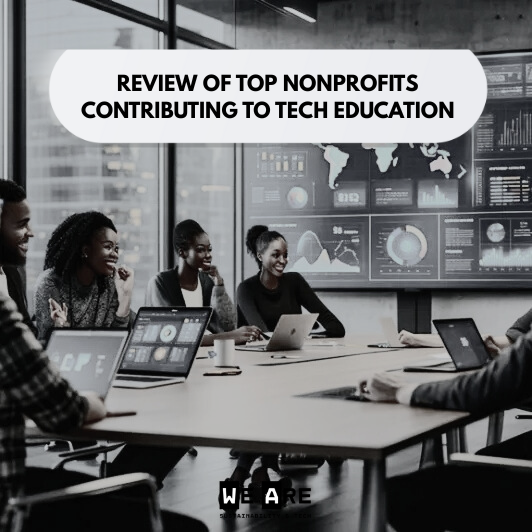
You’ve likely noticed the growing importance of tech education in the current digital economy. As opportunities expand, several nonprofit organizations are working tirelessly to guarantee these opportunities reach everyone, regardless of background or circumstances. From teaching coding to elementary students to preparing underrepresented groups for tech careers, these organizations are reshaping the industry’s future. Their innovative approaches and measurable impacts deserve closer examination, especially if you’re interested in supporting tech education or considering a career in this rapidly evolving field.
Code.org: Revolutionizing Computer Science in K-12 Education
Founded in 2013, Code.org has transformed how computer science is taught in K-12 classrooms across America. Their extensive coding curriculum breaks down complex programming concepts into digestible modules that resonate with young minds.
You’ll see impressive student engagement through their interactive approach, particularly during the annual “Hour of Code” event that reaches millions globally.
They’ve successfully bridged educational gaps by making computer science accessible to underrepresented groups.
Code.org’s impact extends beyond programming skills; they’re cultivating critical thinking and problem-solving abilities essential for tomorrow’s innovators.
Their partnership with school districts guarantees sustainable implementation of computer science education nationwide.
Black Girls Code: Empowering Young Women of Color in Technology
Since its inception in 2011, Black Girls Code has been tackling the diversity gap in technology by providing young women of color with essential coding skills. The organization’s workshops and hackathons create pathways for underrepresented girls to enter STEM fields.
You’ll find their impact measurable through extensive mentorship programs connecting students with industry professionals. These relationships foster both technical skills and confidence in young participants.
Their diversity initiatives extend beyond coding to include leadership development and entrepreneurial thinking. By reaching girls as young as seven, they’re building a pipeline of future innovators who’ll transform tech’s environment.
The result? A growing network of confident, skilled technologists reshaping Silicon Valley.
Girls Who Code: Closing the Gender Gap in Tech
While Black Girls Code focuses specifically on young women of color, Girls Who Code takes a broader approach to addressing technology’s gender imbalance. Founded in 2012, this organization has reached over 500,000 young women through their immersive programming.
You’ll find their coding workshops available in all 50 states, making technical education accessible regardless of geography. Their curriculum combines project-based learning with real-world applications, preparing participants for future tech careers.
What sets Girls Who Code apart is their ecosystem approach, they don’t just teach coding but cultivate communities that support gender diversity long-term.
Their college alumni network maintains an impressive 80% persistence rate in tech-related fields.
The Hidden Genius Project: Mentoring Black Male Youth in Technology
After recognizing a critical gap in tech opportunities for young Black males, The Hidden Genius Project emerged as a transformative initiative in Oakland, California. Founded in 2012, it offers intensive mentorship programs teaching coding, leadership, and entrepreneurship to underserved youth.
You’ll find their mentorship impact extends beyond technical skills, they’re building confident innovators ready to tackle tomorrow’s challenges. Through immersive summer programs and year-round support, they’ve empowered hundreds of young men to pursue tech careers.
Their approach combines technology education with holistic youth empowerment, creating pathways to success that previously seemed unreachable.
The results speak volumes: alumni consistently advance to prestigious universities and tech positions.
NPower: Creating Pathways to Tech Careers for Military Veterans and Underserved Communities
For over two decades, NPower has stood at the forefront of bridging the digital divide by connecting military veterans and individuals from underserved communities to meaningful tech careers.
Their innovative approach combines technical training with professional development, ensuring participants gain both skills and confidence. NPower’s veteran outreach initiatives have helped thousands shift from military service to thriving tech careers.
What sets them apart is their robust community partnerships with major corporations that provide internships, mentorship, and job placement.
You’ll find their programming in seven U.S. regions plus Canada, creating tech pathways where they’re needed most, transforming not just careers but entire communities.
Per Scholas: Transforming Tech Training for Adult Learners
Per Scholas has pioneered inclusive workforce development models that open tech careers to adults from diverse backgrounds.
You’ll find their industry-aligned certification pathways strategically designed to meet employer needs while equipping learners with marketable skills.
Their approach has yielded impressive measurable employment outcomes, with graduates seeing significant income increases and high job placement rates in the technology sector.
Inclusive Workforce Development Models
While many tech training programs target college graduates, Per Scholas has pioneered an inclusive approach that serves adult learners from diverse backgrounds.
Their model recognizes that talent exists in all communities, particularly those historically excluded from tech careers.
You’ll find their diversity initiatives extend beyond recruitment, embedding inclusion throughout the curriculum.
Their skill building programs focus on both technical expertise and workplace readiness, preparing graduates to thrive in professional settings.
What makes Per Scholas effective is their employer partnerships that inform curriculum design, ensuring training matches actual job requirements.
This creates a sustainable pathway for participants to enter tech careers without traditional credentials.
Industry-Aligned Certification Pathways
Industry-Aligned Certification Pathways focus on credentials that directly translate to employer requirements, setting Per Scholas apart from traditional educational models.
Their curriculum adapts quickly to tech industry shifts, guaranteeing you’re learning skills companies actively seek.
Per Scholas builds certification frameworks around CompTIA, AWS, and Google credentials, qualifications employers recognize and value.
Their rigorous skills assessment process guarantees you’re progressing toward job readiness while identifying areas needing additional support.
This approach creates a direct bridge between training and employment, eliminating the gap between education and workplace demands that often plagues career changers and adult learners entering tech fields.
Measurable Employment Outcomes
The true test of any tech training program lies in what happens after graduation, and this is where Per Scholas delivers compelling results. Their employment statistics tell a powerful story: 85% of graduates secure relevant tech positions within six months, with average salary increases of 400% compared to pre-program earnings.
You’ll find their job placement success isn’t accidental. Per Scholas meticulously tracks outcomes across demographics, ensuring equitable results for women and people of color.
Their transparent reporting includes retention rates at 12 and 24 months, metrics that demonstrate lasting career impact rather than just initial employment.
Mouse: Pioneering Youth Development Through Technology
Founded in 1997, Mouse has established itself as a trailblazer in bridging the digital divide for underserved youth across America. Their innovative programs combine technology access with hands-on learning experiences that empower young people to become creators rather than just consumers of technology.
You’ll find Mouse’s approach particularly effective because they leverage youth engagement strategies that connect real-world problems with technical solutions.
Their Design League program challenges participants to develop assistive technologies, while their STEM curriculum reaches students in over 250 schools nationwide.
They’ve transformed technology education from passive learning to active problem-solving.
Hack the Hood: Connecting Local Businesses With Tech-Trained Youth
Since 2013, Hack the Hood has pioneered an innovative model that addresses two community needs simultaneously: small businesses lacking digital presence and young people of color seeking pathways into tech careers.
You’ll find their approach invigoratingly practical, they train youth from underserved communities to build websites and manage digital marketing for local businesses. Through intensive bootcamps, participants gain real-world portfolio experience while entrepreneurs receive essential digital tools.
Their success stems from robust community partnerships that create sustainable ecosystems where technical skills translate into economic opportunity.
This youth empowerment initiative doesn’t just teach coding; it cultivates entrepreneurial thinking, professional communication, and leadership abilities, transforming participants into tech ambassadors within their communities.
CodePath: Redesigning Computer Science Education for College Students
While Hack the Hood focuses on youth pre-college, CodePath shifts our attention to transforming how college students access computer science education.
They’ve pioneered curriculum innovation that bridges the gap between academic theory and industry demands.
You’ll find CodePath’s approach invigoratingly practical. They partner with universities to implement courses that mirror real-world engineering practices while boosting student engagement through project-based learning.
Their model eliminates traditional barriers by providing free, industry-vetted training to students regardless of their institution’s resources.
What’s remarkable is how they’ve scaled this impact across hundreds of colleges, creating pathways for underrepresented students to secure competitive tech jobs.
Technovation: Global Tech Entrepreneurship Programs for Girls
Technovation’s impressive global impact includes reaching over 34,000 girls across 100+ countries, creating measurable increases in participants’ confidence and technical skills.
You’ll find their curriculum expertly balances technical training with entrepreneurial thinking, allowing students to develop both coding proficiency and business acumen simultaneously.
Their project-based learning approach culminates in students creating market-ready mobile apps that address real community problems, demonstrating the program’s effectiveness in producing tangible outcomes.
Global Impact Metrics
Three key metrics highlight Technovation’s remarkable global reach and effectiveness in empowering young women.
First, they’ve connected with 34,000+ girls across 100+ countries, dramatically expanding global education opportunities in underserved regions.
Second, their tech accessibility initiatives have resulted in a 78% increase in participants pursuing STEM careers after program completion.
Third, alumni have launched 375+ real-world apps addressing community challenges from healthcare to ecological sustainability.
You’ll find these statistics particularly compelling as they demonstrate concrete outcomes rather than just participation numbers.
Technovation doesn’t simply introduce girls to coding, it transforms them into tech entrepreneurs creating tangible solutions for tomorrow’s most pressing problems.
Curriculum Design Strengths
Beyond impressive statistics, what truly sets Technovation apart is its masterfully designed curriculum that balances technical skills with entrepreneurial thinking.
You’ll find their pedagogical strategies seamlessly integrate real-world problems with coding fundamentals.
- Mentor-supported learning cycles that transform abstract concepts into tangible mobile apps
- Industry-relevant curriculum innovation featuring AI, machine learning, and market analysis
- Progressive skill-building framework that adapts to different learning styles and experience levels
Their approach doesn’t just teach coding, it cultivates critical thinking through project-based challenges.
Students don’t merely consume technology; they create solutions for authentic community needs, embodying the learn-by-doing philosophy that produces confident, capable innovators.
Conclusion
These nonprofits aren’t just teaching code, they’re transforming lives. You’ll find they’re breaking barriers for women, people of color, veterans, and youth from underserved communities. By supporting these organizations, you’re helping build a tech industry that reflects our diverse society. Their work guarantees everyone has a seat at the table where tomorrow’s digital solutions are created.